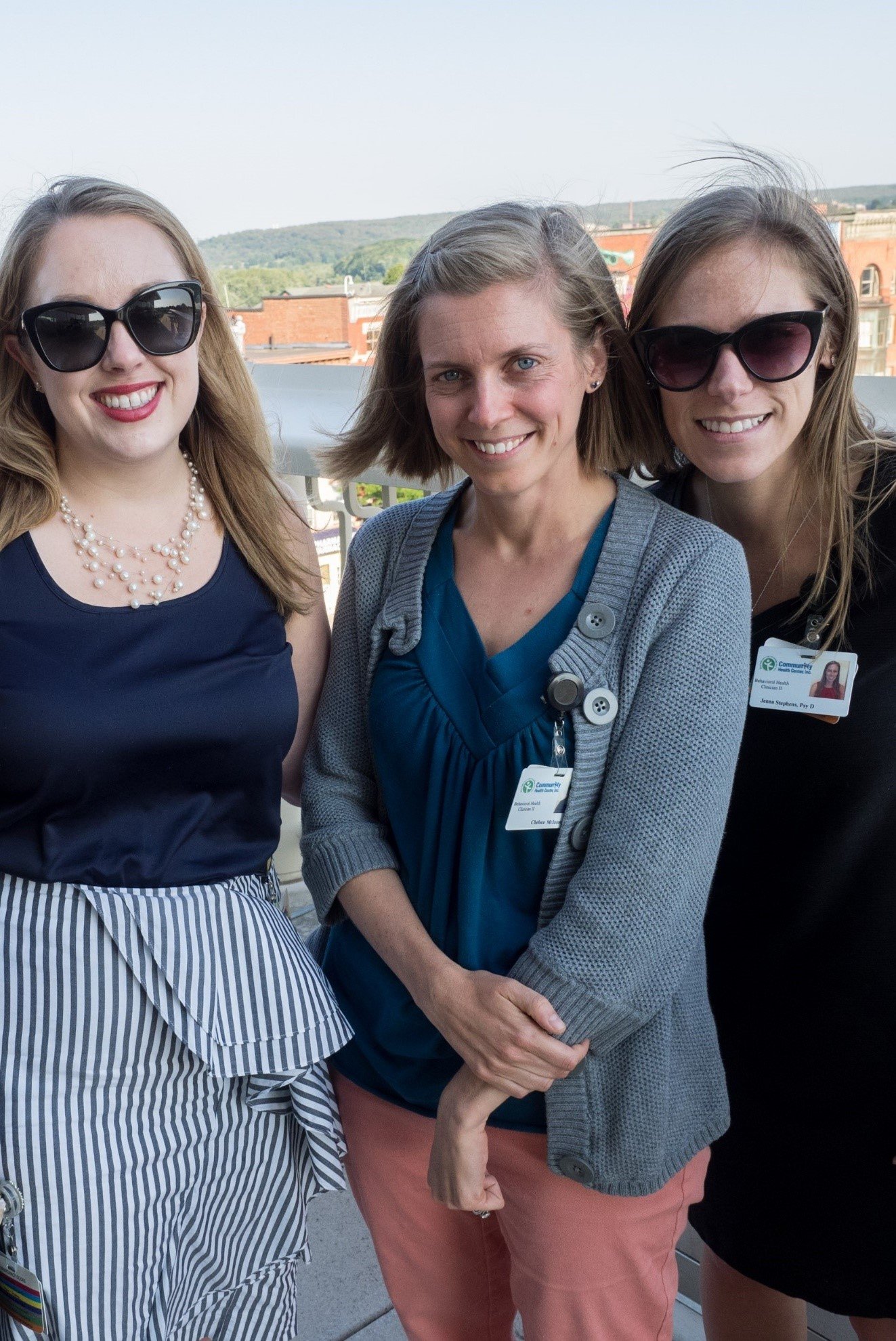


The Postdoctoral Residency Program has trained residents for over ten years! This unique experience provides outpatient treatment across the lifespan in a primary care integrated behavioral health setting. We offer residents the opportunity to select from four specialized concentrations to complement their generalist training while nurturing their other interests.
Addiction Psychology Concentration
The Addiction Psychology Concentration will focus on providing the resident with specific skills to assess, understand, appropriately refer, and treat clients with substance use disorders (SUD) including opioid use disorder (OUD). Residents in this concentration will participate in co-facilitating and/or leading a Medication for Opioid Use Disorder (MOUD) group and will be provided didactic training specific to SUD/OUDs. Residents will also engage in the Weitzman Institute’s Substance Use Health (SUH) ECHO, integrated care meetings for SUH patients at CHC, and will be provided supervision specific to working with patients with a substance use disorder. Residents in the Addiction Psychology concentration will receive additional training on Motivational Interviewing (MI) and will be given direct feedback on their MI skills from CHC’s Clinical Director of Substance Use Disorder Services. Residents will also participate in observations of community-based recovery activities, including attending peer support meetings such as Narcotics Anonymous (NA), Alcoholics Anonymous (AA), and Celebrate Recovery, to help gain an understanding of the broader culture of recovery. Residents in this concentration will complete a rotation through CHC’s Wherever You Are (WYA) program and provide direct care to patients with an SUD in our shelter settings. Additional training opportunities at conferences will be made available and residents in this concentration will be encouraged to seek educational opportunities at conferences that provide more information on the neuroscience of addiction as well as novel approaches to medication for substance use disorders. The purpose for developing this specialized area of training is to contribute to the development of a workforce of psychologists trained in the integrated behavioral health model of care with specialized experience in the treatment of clients who are living with substance use disorders.
Child and Adolescent Concentration
The Child and Adolescent Concentration will focus on providing the resident with specific skills, interventions, and supervision related to treating children, adolescents, and their families. Additionally, all child concentration residents will be trained on the Attachment Regulation and Competency (ARC) framework. Residents in this concentration have an opportunity to be placed at one of CHCI’s Hartford, Middletown, Stamford sites and/or in one of the School Based Health Centers located across the state of Connecticut. Residents in this concentration will provide three days of clinical care in a child-based setting and one day in a lifespan based setting.
All residents will also participate in a monthly child focused case presentation meeting, facilitated by a rotation of CHC psychologists who specialize in working with children. Supervision for residents in this concentration will be provided by CHC psychologists with specialized experience in the treatment of children, adolescents, and their families. Those working in this area may have the opportunity to receive training and participate in evidence-based programs like Trauma Focused Cognitive Behavioral Therapy (TF-CBT) and Cognitive Behavioral Intervention for Trauma in Schools (CBITS). The purpose of this concentration is to contribute to the development of a workforce of psychologists trained to the integrated behavioral health model of care with specialized experience in the treatment of children and adolescents and their families.
Health Psychology Concentration
The health psychology concentration will focus on providing the resident with specific skills to collaborate across disciplines to deliver care to clients with comorbid behavioral and physical health needs. Residents will be provided with specific curriculum content for working with clients with health related needs in primary care. Residents will be trained and will provide warm hand offs (WHOs) specific to addressing smoking cessation and chronic health conditions, as well as provide consultations related to bariatric assessments and sleep consults when available. They will be expected to facilitate at least one group that addresses an integrated need (including but not limited to diabetes management, sleep, smoking cessation). The purpose for developing this specialized area of training is to contribute to the development of a workforce of psychologists trained in the integrated behavioral health model of care with specialized experience health related concerns for clients.
Key Populations Concentration
The key populations concentration will focus on a spectrum of health care, including mobile health, quality improvement, training and education, and research, to help key populations within communities. Residents in this concentration will be assigned either a shelter placement or the Resilience Program. This unique experience allows residents to design their placement with the Director for the Center for Key Populations, identify a quality improvement project related to the populations served and collaborate with a primary care provider who provides medical services specifically to populations associated with the Center for Key Populations. Please visit the Key Populations’ website for more information about potential opportunities in this concentration.
The purpose for developing this specialized training area is to contribute to the development of a workforce of psychologists trained in the integrated behavioral health model of care with specialized experience in providing comprehensive, respectful, evidence-based care for key populations in our communities.
All residents will have the opportunities to:
Specific trainings in the following areas will be offered:
Supervision is provided by psychologists licensed by the state of Connecticut.
CHC is willing to adjust supervision hours, as well as adjust total number of contact hours to ensure supervisor requirements are met for other state licensure requirements. The current program structure meets requirements for the majority of state requirements.
The aim of the postdoctoral residency program at Community Health Center, Inc., is to produce professional psychologists equipped to serve individuals, families, and groups in a patient-centered medical home model, utilizing essential skills requisite of an advanced behavioral health clinical practitioner in an integrated primary care setting. The intention of the postdoctoral residency program is to develop professional, clinical, ethical, quality improvement, supervision, leadership and cultural skills under supervision and to provide a means for cultivating a resident’s professional identity as a clinical psychologist, a functioning member of a clinical team, and a community member. Upon graduation from the residency, individuals will be able to confidently, ethically, and with cultural competency, provide psychotherapy to diverse underserved clients with various backgrounds across the lifespan. Residents will enhance their capacity to provide care through a wide range of services and methods to improve the physical and emotional health of the individuals and communities in which we serve.
| Competency 1: Integration of Science and Practice |
| 1A: Displays clinical skills with a wide variety of clients and presenting concerns, including but not limited to clients across the lifespan, varying diagnoses, and populations. |
| 1B: Demonstrates the flexibility to adapt interventions where appropriate for both in person and treatment over telehealth, specific to case and context. |
| 1C: Provides diagnoses to clients that are clear, relevant and accurate, as well as provides comprehensive justifications for those diagnoses. |
| 1D: Evaluates treatment progress and modifies treatment planning as indicated. |
| 1E: Demonstrates the ability to critically evaluate foundational and current research that is consistent with working in an integrated, primary care setting in a federally qualified health center. |
| 1F: Integrates knowledge of foundational and current research consistent with the program’s focus areas of working in an integrated, primary care setting in a federally qualified health center in the conduct of professional roles (e.g. research, service, and other professional activities). |
| 1G: Demonstrates knowledge of common research methodologies used in the study of the program’s focus area working in an integrated, primary care setting in a federally qualified health center and the implications of the use of the methodologies for practice. |
| 1H: Demonstrates the ability to formulate and test empirical questions informed by clinical problems encountered, clinical services provided, and the clinic setting within which the resident works. |
| Competency 2: Individual and Cultural Diversity |
| 2A: Independently monitors cultural awareness of self (including an understanding of how their own personal/cultural history, attitudes, and biases may affect how they understand and interact with people different from themselves) and seeks appropriate consultation if there is a gap in this awareness. |
| 2B: Considers aspects of the client’s identities (including but not limited to ethnicity, race, gender, age, developmental stage, religion, disability, socioeconomic and sexual identity) and how they intersect in conceptualizing, diagnosing, and treating clients. |
| 2C: Demonstrates ability to address differences in colleagues’ intersecting identities, including the ability to integrate awareness and knowledge of individual and cultural differences in the conduct of professional roles (e.g., research, services, and other professional activities). Applies a framework for working effectively with areas of individual and cultural diversity not previously encountered over the course of their careers. |
| 2D: Demonstrates knowledge of the current theoretical and empirical knowledge base as it relates to addressing diversity in all professional activities, including research, training, supervision, consultation, and service and can independently apply knowledge and demonstrate effectiveness in working with the range of diverse individuals and groups encountered during residency. |
| Competency 3: Ethical and Legal Standards |
| 3A: Independently utilizes ethical decision-making in all professional activities, acting in accordance with the APA Ethical Principles of Psychologists and Code of Conduct. |
| 3B: Understands the ethical and legal considerations related to a client’s needs and can apply ethical decision-making processes in treating the client, including addressing exceptions that arise related to confidentiality. |
| 3C: Proactively assesses and documents safety risk and interventions, including but not limited to concerns of suicidality, homicidality, and suspicion of abuse, and seeks consultation in such situations. |
| 3D: Writes documentation that adheres to agency, professional, state, federal, telehealth and insurance laws, regulations, rules, policies, standards, and guidelines, including but not limited to a care plan with specific and measurable objectives, all diagnoses, goals as stated in the patient’s own words, and reviewed within four weeks, eight weeks, then every 12 weeks thereafter. |
| Competency 4: Primary Care and Integrated Service Delivery |
| 4A: Gathers relevant information during Warm Handoff visits to respond to the requesting provider in a succinct and timely manner. |
| 4B: Actively engages in virtual and in-person team meetings and communicates effectively with behavioral health, medical, leadership and other staff using synchronous and asynchronous communication to enhance collaboration and treatment outcomes. |
| 4C: Applies behavioral health knowledge when identifying, screening, assessing, and diagnosing behavioral health needs as part of a primary care team, including but not limited to anxiety, trauma related disorders, mood disorders, insomnia, psychosis, substance use, violence, and attention concerns. |
| 4D: Exhibits an understanding of the external factors that contribute to health-related behaviors and addresses a client’s psychosocial factors, including but not limited to food insecurity, housing insecurity, community support, employment, and any other related environmental stressors, when treating the client. |
| 4E: Demonstrates the ability to provide behavioral health related feedback to common medical concerns in the primary care setting, including but not limited to type II diabetes, chronic pain conditions, obesity, multiple sclerosis, HIV, and hepatitis-C. |
| Competency 5: Building and Running Groups |
| 5A: Demonstrates the understanding of how to utilize and/or build an appropriate group curriculum. |
| 5B: Conducts pre-group evaluations to establish rapport with clients while evaluating their appropriateness for the group and it overall as a modality of treatment. |
| 5C: Appropriately refers clients to colleagues’ groups, and follows up with their referrals regularly, as well as and elicits referrals from other staff members and clients, including but not limited to other behavioral health clinicians, medical providers, and patient service associates. |
| 5D: Shows ability to conduct group sessions independently. |
| 5E: Fosters an inclusive environment as a group facilitator, and addresses group dynamics as they arise. |
| Competency 6: Interpersonal Skills and Workplace Development |
| 6A: Communication is informative, succinct, and completed promptly, in accordance with agency policy and culture. |
| 6B: Proactively addresses colleague conflicts in the workplace and seeks consultation when appropriate. |
| 6C: Proactively addresses client ruptures, understands their role and the client’s in the situation, and seeks consultation when appropriate. |
| 6D: Demonstrates receptivity to corrective and constructive feedback from supervisors and staff as demonstrated by their verbal and non-verbal responses. |
| 6E: Provides constructive feedback to supervisors and staff. |
| 6F: Exhibits the ability to reflect on one’s reactions and behaviors in different interpersonal interactions. |
| 6G: Provides organized and engaging presentations on clinical topics. |
| 6H: Provides a telehealth environment that simulates a clinical setting, including and not limited to consistent lighting, stable camera angle, clinical attire and background, clear audio and picture quality. |
| Competency 7: Supervision Development |
| 7A: Articulates awareness of their own identity and value differences among consultee, self and clients, and articulates how these differences may affect dynamics between these groups. |
| 7B: Fosters consultees’ consciousness of the identity and value differences among the resident, the consultee and the clients, and address these differences in therapy. |
| 7C: Develops an alliance despite potential differences between self and consultee. |
| 7D: Shows awareness of supervisory developmental models and provides support to the consultee aligned with their current developmental need. |
| 7E: Demonstrates the ability to provide both formative and summative feedback to consultee. |
| 7F: Supports the consultee in developing ethical practice and following through with legal and administrative expectations. |
| 7G: Collaborates with the group supervision co-facilitator constructively to provide a growth producing learning space amongst the consultees that invites discussion and critical thinking, affirms consultee contributions, makes connections between the consultees’ contributions, and supports a flowing conversation amongst the consultees. |
| Competency 8: Quality Improvement |
| 8A: Demonstrates knowledge of quality improvement processes and relevant healthcare innovations within an integrated healthcare service system. |
| 8B: Systematically analyzes and utilizes appropriate tools to measure quality and impact of changes within an integrated healthcare service system. |
| 8C: Contributes to performance improvement by identifying areas for change (e.g., issues related to clinical workflow) and uses appropriate quality improvement procedures to facilitate the change process. |
| Competency 9: Treatment of Opioid Use Disorders/Substance Use Disorders (OUD/SUD) |
| 9A: Routinely assesses and diagnoses all clients and diagnoses all relevant OUD/SUDs, including but not limited to appropriately assessing tolerance and withdrawal, and identifying appropriate level of severity. |
| 9B: Exhibits awareness of how social justice elements intersect with personal biases and transference/countertransference towards individuals with substance use disorders, and proactively addresses concerns as they arise in supervision. |
| 9C: Uses specific motivational interviewing interventions in line with the stage of change of the client, including understanding the role of ambivalence in treating SUDs. |
| 9D: Uses harm reduction as a primary lens for treating clients and determining whether to engage or discharge clients, and when discharges are appropriate, can articulate the reasons for discharge within a harm reduction framework. |